Textile sourcing · Bedding
Cotton’s Journey: Comparing Naturepedic and DownTown Company on Sourcing and Production
A cotton blanket can feel beautifully simple: soft against the skin, familiar in the bedroom, easy to layer through the seasons. Its supply chain is anything but. To understand what a sustainability claim really tells us, follow the fiber from field to fabric—and look closely at the details Naturepedic and DownTown Company share about materials, origins, dyeing, and care.
Published October 14, 2026
Why the cotton label is only the beginning
Cotton is often treated as a reassuring shorthand: natural, breathable, and at home in a well-made bed. But the word on a label identifies a fiber, not an entire production story. Two blankets can both be cotton while differing substantially in how the cotton was grown, where it was spun or woven, which dyes and finishes were used, and how much information a maker makes available to the person choosing it.
That distinction matters for anyone trying to buy thoughtfully. “Natural” does not automatically mean organic, low-impact, locally made, or traceable. “Made in Portugal” identifies a manufacturing location, but does not necessarily tell you where the cotton was cultivated. A certification can verify particular standards within its scope, but it should not be read as a universal guarantee about every stage of a product’s life.
Naturepedic and DownTown Company offer a useful comparison because the product descriptions associated with their cotton blankets foreground different kinds of information. Naturepedic’s examples include organic-cotton claims and, on some products, GOTS certification. DownTown Company’s cotton blankets emphasize long-staple cotton, Portuguese weaving, low-impact dyes, and production without harsh chemicals. Those are meaningful points of comparison—but they are not interchangeable claims, and they do not establish that every product from either company shares the same specifications.
The most useful approach is to read each item as its own case study. Ask what the description actually confirms, what it leaves open, and what additional documentation might help complete the picture. That is less dramatic than a sweeping green promise, but far more illuminating.
Naturepedic: organic fiber and product-level certification
Naturepedic’s organic cotton bedding offers a direct example of how a material claim can be supported by a named standard. Its Organic Cotton Waffle Blanket is described as made from certified organic cotton, free from GOTS-prohibited chemicals, dyes, and treatments, and pre-washed for softness. The brand’s Organic Cotton Waffle Baby Blanket is identified as GOTS-certified organic cotton and is described as free from harsh chemicals, dyes, and treatments. A separate Organic Cotton Muslin Blanket is also described as GOTS-certified, made from four layers of organic cotton, and designed with a breathable open weave.
For readers comparing cotton bedding, the difference between a general organic claim and a named certification is worth noticing. The Global Organic Textile Standard, commonly known as GOTS, sets criteria for certified textile products that cover organic fibers and specified environmental and social requirements along the processing chain. The exact product certificate and scope remain important: a consumer should check whether the specific item is certified, rather than assuming that a certification mentioned somewhere in a brand’s collection applies universally.
Naturepedic’s product descriptions also connect material choice to construction. A waffle weave creates a textured surface, while the open structure of muslin supports airflow. These details help explain how a blanket may behave in use—its texture, breathability, and suitability for layering—without, on their own, proving the environmental impact of its production. A fiber standard and a weave description answer different questions, and both can be useful.
Origin information is another area where product pages can be more or less specific. The supplied descriptions identify organic cotton as a material and, in some cases, describe how it is processed or certified. They do not consistently name the country where the cotton for each blanket was grown or the country where the finished cloth was woven. That is not evidence of a problem; it simply marks a limit in the publicly presented details. A reader seeking a more complete chain of custody can reasonably ask for fiber-growing origin, spinning and weaving locations, dyeing and finishing locations, and the certificate scope for the exact item.
Care is part of the story, too. Several Naturepedic cotton blankets are machine washable, with warm or cold washing and low-heat tumble drying specified according to the particular product. Easy maintenance can make a blanket practical for long-term use, but care instructions should always be followed product by product. A general brand impression should never replace the label attached to the actual blanket.
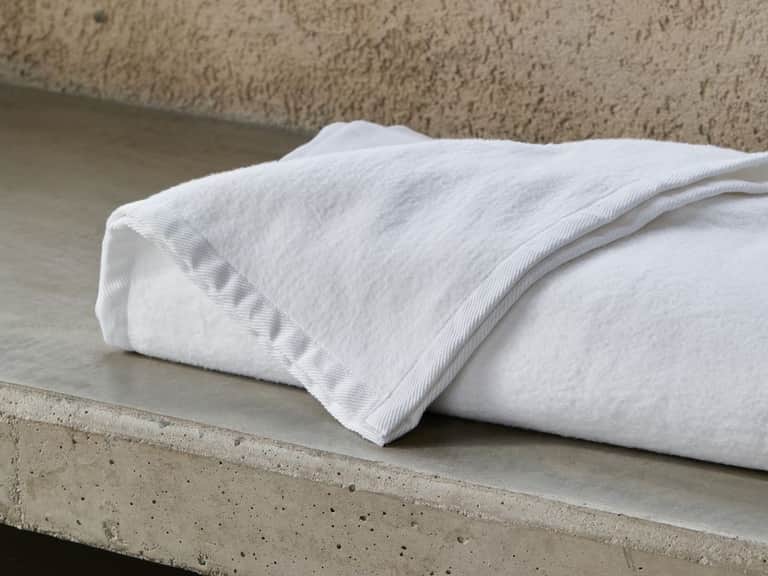
For a closer look at one listed example, the Naturepedic Organic Cotton Waffle Blanket is described as certified organic cotton, pre-washed, breathable, and free from GOTS-prohibited chemicals, dyes, and treatments. Its specifications make the product’s material and construction legible; the remaining questions about the precise agricultural and manufacturing origins are still worth asking if those details guide a purchase.
DownTown Company: long-staple cotton and Portuguese production
DownTown Company’s cotton blankets tell a different, more geographically specific story in the descriptions available here. Its Granny Blankets and Throws are described as woven in Portugal from 100% long-staple cotton, made with low-impact dyes, and produced without harsh chemicals. The Classic Herringbone Blankets and Throws likewise specify Portuguese production, long-staple cotton, and low-impact dyes. The collection’s product information emphasizes washable designs, durable finishing, and everyday use.
“Long-staple” refers to the length of cotton fibers. Longer fibers can be spun into smoother, stronger yarns, which can contribute to a refined hand and fabric durability. It is a quality descriptor, not a certification of farming practices. It does not, by itself, tell a buyer whether the cotton was conventionally or organically grown, how irrigation or agricultural chemicals were managed, or what labor standards applied at every stage.
“Woven in Portugal” is a valuable production detail because it identifies where the described fabric was made. But it should be interpreted precisely. It does not necessarily mean the cotton was grown in Portugal, nor does it establish where the yarn was spun, where any dyeing occurred, or whether every stage of finishing took place in the same facility. When a label gives one location, it gives one piece of the map—not the whole route from farm to blanket.
The low-impact dye statement is another useful clue, but its meaning depends on how the company defines and substantiates it. The phrase suggests attention to dyeing choices, yet it does not name a specific dye standard or disclose process measurements in the product information summarized here. A reader who wants to compare dye claims across brands can ask what “low-impact” means in practice: whether it relates to restricted substances, water or energy use, wastewater treatment, or another defined criterion.
DownTown Company also describes its cotton blankets as washable and finished for regular use. This focus on maintenance and durability is relevant to sustainability in a practical sense: a textile kept in service for many years may avoid premature replacement. Still, durability is not established by a marketing adjective alone. Weave, yarn quality, seam or hem construction, laundering habits, and repairability all influence how a blanket fares over time.
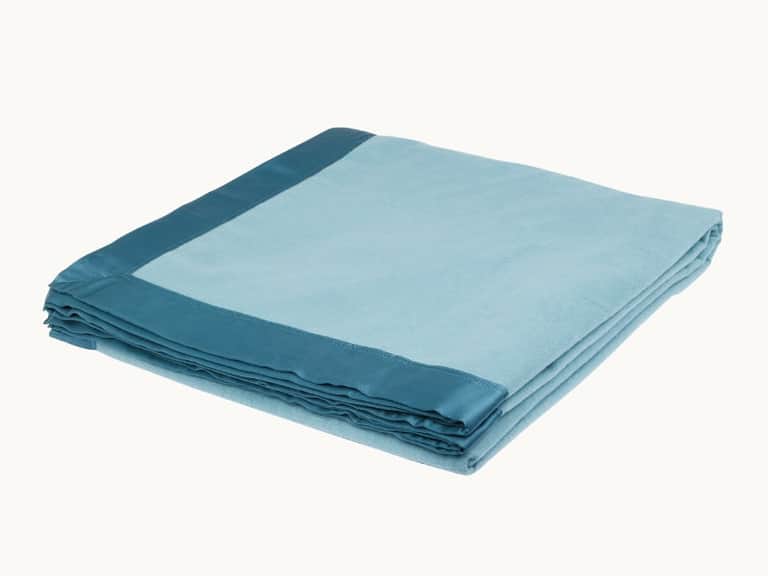
The DownTown Granny Blankets and Throws provide a concrete example: the description specifies 100% long-staple cotton, weaving in Portugal, low-impact dyes, and a washable finish. The combination makes the manufacturing location and some finishing claims visible, while leaving the cotton’s growing origin and the exact definition of “low-impact” as open questions.
A side-by-side reading of the claims
At first glance, the two brands appear to speak different languages. Naturepedic foregrounds organic cotton and named certification on selected products; DownTown Company foregrounds fiber length, Portuguese weaving, low-impact dyes, and the absence of harsh chemicals in selected descriptions. The comparison is not a verdict on which company is universally more sustainable. It is a way to see how distinct kinds of evidence answer distinct consumer questions.
| What to examine | Naturepedic examples | DownTown Company examples |
|---|---|---|
| Fiber composition | Selected blankets identify organic cotton; some descriptions name GOTS certification. | Selected blankets identify 100% long-staple cotton. |
| Growing origin | Not consistently stated for the cotton in each blanket description reviewed. | Not stated in the cited blanket descriptions. |
| Manufacturing location | Not consistently identified for each blanket in the descriptions reviewed. | Portugal is specified for selected cotton blankets and throws. |
| Dyeing and finishing | Some products are described as free from GOTS-prohibited chemicals, dyes, and treatments. | Selected descriptions refer to low-impact dyes and production without harsh chemicals. |
| Care and use | Product-specific machine-wash instructions; textures include waffle and muslin. | Selected blankets are described as washable and intended for everyday layering. |
This table reflects the product descriptions available, not a comprehensive audit of either company’s operations. The distinction is important. Product pages are useful starting points, but they may condense complex supply chains into a few lines. Certification documents, supplier disclosures, and facility information can provide a deeper view where available.
What sustainability language can—and cannot—tell you
Sustainability is not a single attribute that can be read from a fiber name. Cotton’s impacts can vary with climate, irrigation, soil conditions, pest management, processing methods, energy sources, dye chemistry, wastewater treatment, transport, and product lifespan. A responsible assessment avoids turning any one desirable feature into a complete environmental conclusion.
Organic production, for example, is relevant to how agricultural inputs are managed under the applicable standard. It does not automatically reveal the water profile of a particular farm, the conditions in every processing facility, or the emissions associated with shipping. Likewise, a blanket woven in a country with a long textile tradition may offer an important origin detail, but geography alone does not verify labor practices or environmental performance.
Nor should a claim such as “chemical-free” be taken literally without context. All fibers and finished textiles are made of chemicals in the scientific sense. In consumer descriptions, phrases like “free from harsh chemicals” generally communicate a narrower intention, but the exact substances excluded and the basis for the claim may not be specified. More precise wording—naming a standard, a restricted-substance list, or a certified product—gives readers something more concrete to evaluate.
The strongest product information is specific, verifiable, and proportionate. It distinguishes the raw material from the finished fabric; identifies the scope of a certification; names manufacturing locations at the relevant stages; and explains terms that could otherwise feel reassuring but vague. Clear disclosure helps consumers compare products without asking them to infer more than the evidence supports.
A reader’s checklist for cotton bedding
When browsing blankets, take a moment to move from mood to material. A beautiful color and an inviting hand are part of the decision, but a few focused questions can reveal how much of the cotton’s journey is visible.
- Is the fiber composition exact? Look for a percentage rather than a broad phrase such as “cotton-rich.” Check whether the product contains blends, trims, or separate filling.
- Is organic cotton certified? If a certification is named, confirm that it applies to the specific product and understand what its scope covers.
- Where was the cotton grown? A country of weaving is not the same as a country of cultivation. Ask whether the brand can identify the agricultural origin.
- Where was the yarn made and fabric woven? Separate locations for spinning, weaving, dyeing, and finishing can help clarify a supply chain.
- What does the dye or chemical claim mean? Look for named standards or a clear explanation of terms such as “low-impact” and “without harsh chemicals.”
- How is the item cared for? Choose a blanket whose laundering requirements fit your routine. Lower-maintenance care may help you keep it in use, but always follow its own instructions.
- Does the construction suit the way you live? A breathable muslin, textured waffle, or more substantial weave can each serve a different purpose. Practical fit is part of buying well.
- Can the product be used for years? Consider weight, finish, repair options, and whether the blanket suits more than one season or room.
These questions are not a test a brand must pass in a single product listing. They are a framework for distinguishing documented details from assumptions. If a missing detail matters to you, asking the company directly is a sensible next step.
From field to bed: the value of a more complete story
The journey of cotton bedding begins before a loom is set in motion. Cotton is cultivated, harvested, cleaned, spun into yarn, woven or knitted into fabric, and then often dyed, washed, finished, cut, and sewn. Each stage can shape the textile’s feel and performance. Each also raises different questions about resource use, working conditions, chemical management, and traceability.
Naturepedic’s organic and certification language gives readers an important lens on selected products, while DownTown Company’s descriptions make Portuguese weaving and low-impact dye claims prominent for selected cotton blankets. These are not competing definitions of sustainability so much as different windows onto a supply chain. One speaks more directly to fiber standards; the other supplies notable details about fiber quality and production location.
The most thoughtful comparison keeps both windows open. It recognizes the value of a named standard without treating it as a complete account of every impact. It appreciates a stated manufacturing origin without mistaking it for full farm-to-fabric traceability. And it treats design—breathability, durability, care, and versatility—as part of the equation, because a blanket’s useful life matters as much as the promise made at the point of sale.
Ultimately, a better-informed cotton purchase is not about finding a perfect label. It is about choosing with clarity: knowing what the brand has confirmed, noticing what remains undisclosed, and selecting a piece whose materials, care needs, and intended life make sense for your home. Cotton may begin in a field, but confidence begins with detail.