Understanding Certifications in Ethical Textiles: A Practical Shopper's Guide
A curated exploration of certifications that illuminate fiber sourcing, factory ethics, and environmental footprint. This is a practical, fashion-forward guide to decoding labels on blankets, throws, and bedding, with insight from trailblazers across eras and regions who shaped our modern relationship with textiles.
In a world where stories of origin matter as much as the fabric itself, certifications function as a passport for textiles. They translate complex supply chains into bite-sized assurances, empowering shoppers to demand transparency without sacrificing style. We’ll decode how to read labels, compare certifications, and ask brands the right questions—while savoring the romance of textiles that feel as indulgent as they are responsible.
The Certification Landscape: A Quick Primer
Certifications are not mere stamps; they are verifications of promises—about sustainable farming, fair labor, and responsible processing. The most relevant certifications for ethical textiles include:
- GOTS (Global Organic Textile Standard) — The gold standard for organic fibers, requiring organic farming, lowest possible chemical inputs, and social criteria for workers. Successful GOTS certification reads as a narrative: organic cotton, safe dyes, validated wastewater management, and fair labor practices.
- Fair Trade — Focused on empowering workers and communities, ensuring fair wages, safe working conditions, and community development premiums. It complements environmental standards with a humane lens on production realities.
- OEKO-TEX — A testing framework that certifies textiles free from harmful substances. It’s a consumer-friendly signal that the product has been screened for chemical safety across its lifecycle.
- Global Recycled Standard (GRS) — Verifies recycled content, environmental management, and social requirements in the supply chain. It’s especially relevant for blankets and throws leveraging recycled fibers.
While other labels exist—like Bluesign, RWS (Responsible Wool Standard), and many regional certifications—the four above form a practical core for everyday consumer decisions.
Reading Certification Labels on Blankets and Throws
When you flip a blanket or throw over in the store or online, you’re peeking into a story. The label often hides layers: fiber content, processing steps, certifications, and care instructions. Here are the practical steps to translate what you see:
- Identify the fiber and processing: Is it organic, recycled, or conventional? Does it carry a GOTS or Fair Trade badge?
- Check the scope of the certification: Does it cover only the fiber, or the entire supply chain from farm to finished product?
- Look for the issuing body and certificate number: A reputable certifier will provide traceability and renewal dates.
- Read the care and end-of-life guidance: Certifications are strongest when paired with durable, repairable design and responsible disposal options.
A Vogue-Era Lens: How Industry Luminaries Have Shaped Our Textile Consciousness
Across centuries, visionary voices—crafters, reformers, and designers—have reframed textiles from mere utility to couture of ethics. Their legacies guide a modern shopper’s approach to certifications, empowering elegant choices with a conscience.
— Think of weavers and textile reformers who championed safer mills and humane working conditions, laying groundwork for later certification regimes. — Designers and brands explored sustainable fibers, natural dyes, and worker welfare as central brand stories, elevating ethics from niche to narrative cornerstone. — Advocates, NGOs, and global brands collaborate to formalize standards, expand transparency, and normalize circular design in everyday textiles.
Time Period A: The Early Reformers | A lineage of activists and artisans who pressed for safer factories and cleaner dye processes, seeding the ethos that would become formal ESG criteria years later.
Time Period B: The Mid-Century Innovators | A wave of designers who valorized natural fibers, organic agriculture, and fair wages, making ethical textiles part of mainstream glamour.
Time Period C: The Contemporary Curators | Modern brands and NGOs converge to codify standards, with shoppers empowered to demand traceability and accountability through certifications.
Three Key Individuals Shaping Textiles Across Time
Beatrix Potter (1866–1943)
Though best known for writing, Potter’s engagement with farming and rural crafts influenced early 20th-century attitudes toward ethical, humane production. Her ethos of care for the land and its creatures echoed in the rise of farm-to-fabric storytelling and the belief that textile work could honor both people and place.
Impact: Introduced a reverence for rural crafts and humane labor as part of cultural literacy, inspiring later movements toward ethical sourcing.
Margaret Bourke-White (1904–1971)
A photographer who chronicled industry and labor, Bourke-White’s documentary work exposed precarious working conditions in textile mills. Her images amplified calls for safer factories and transparent supply chains, influencing later certification frameworks.
Impact: Rendered the humanist case for ethical manufacturing into public discourse, nudging brands toward accountability.
Dr. Kate Fletcher (b. 1966)
A contemporary scholar and designer, Fletcher’s work on sustainable fashion and textile futures has become a cornerstone in understanding circularity, traceability, and ethical materiality in modern textiles.
Impact: Framed the theoretical basis for certifications, pushing for integrated lifecycle thinking in consumer products.
Practical Shopper’s Guide: From Certification to Comfort
To translate theory into everyday luxury, we offer a practical checklist you can apply when evaluating blankets, throws, and nursery textiles:
- Prioritize GOTS-certified organic fibers for a comprehensive standard spanning farming, processing, and social criteria.
- Look for Fair Trade labeling to ensure fair wages and empowering community benefits for workers in the supply chain.
- Check OEKO-TEX and GRS badges for chemical safety and recycled content, respectively, especially for multi-fiber blends.
- When possible, seek transparency statements and supply chain maps from brands—these reveal origin stories, mills, and dye houses.
- Consider product care as a reflection of longevity: certified textiles should also be designed for repair, reuse, and eventual recycling or composting where feasible.
Case Studies: Certifications in Action
Coyuchi: Organic Cotton with a Conscience
Coyuchi has championed organic cotton, weaving, and fair labor practices, often aligning with GOTS and OEKO-TEX certifications. Their fabrics are a touchstone for those seeking luxury textures without compromising ethics.
Takeaway: A model of how a brand can foreground certification narratives in product storytelling, turning ethics into a tactile luxury.
Naturepedic: Organic Fiber and Safety for Nursery
Focused on children’s sleep, Naturepedic emphasizes GOTS-certified organic cotton and safety in nursery textiles. Their products demonstrate how certifications underpin trusted sleep environments.
Takeaway: Certifications become part of a child’s safe, breathable daily life—an ethical baseline for nursery textiles.
A Modern Direction: The New Era of Ethical Textiles
The umbrella of ethical textiles continues to expand, embracing recycled content, regenerative farming, and transparent reporting. Consumers increasingly expect brands to accompany claims with verifiable data: farm audits, mill certifications, water usage disclosures, and end-of-life strategies. The intersection of luxury and responsibility isn’t a paradox—it’s a lifestyle statement that frames our homes as havens of beauty and integrity.
In the spirit of direction, this article leans into practical lexicon and aspirational storytelling. It invites readers to weigh softness and style against responsibility without compromising either. The future of blankets and throws is not only about comfort, but about the stories we tell with our purchases—stories of farmers, artisans, and communities whose livelihoods are safeguarded by credible certifications.
A Featured Product: Petrol Blue Silk Blanket
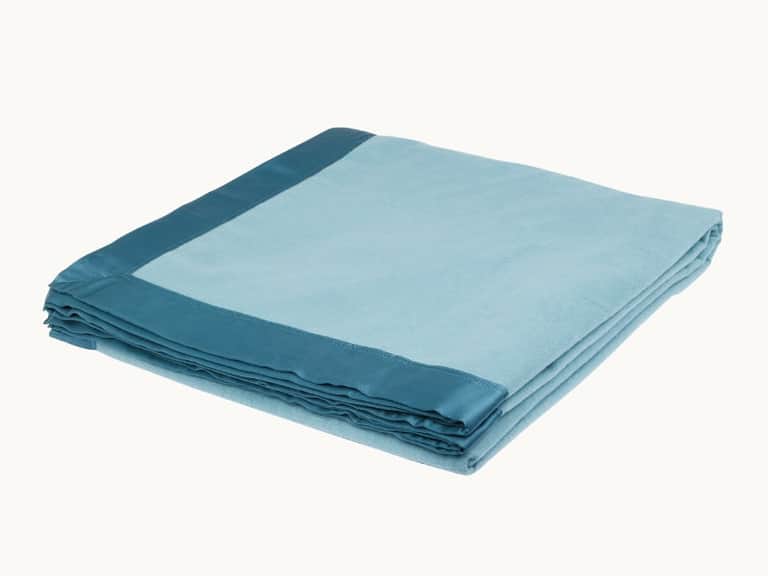
The Petrol Blue Silk Blanket is a 100% silk blanket edged with a silk border in a sophisticated petrol blue. Its whisper-soft drape and year-round warmth elevate any bed or seating area. While silk is inherently luxurious, this piece embodies the ethical luxury ethos through responsible sourcing and careful craftsmanship.
Note: Silk production involves a more specialized supply chain; seek brands that disclose silkworm rearing practices and dye processes, and favor those with third-party certifications for fibers and handling.

Petrol Blue Blanket by Gingerlily — 100% silk, silk border, dry clean only. Size 94" x 94".
How to Start Your Ethical Textile Journal at Home
You don’t need to be a textile scientist to engage with ethical textiles. Here are simple, elegant experiments and projects to deepen understanding while savoring the tactile pleasures of fabric.
- Trace a fiber: Find a blanket in your home and examine its fiber content. Research the likely cultivation, processing steps, and whether certifications apply.
- Label literacy night: Gather a few product labels and practice decoding them. Note which certifications appear, and what they imply about farming, processing, and labor standards.
- DIY dye test: Experiment with a natural dye kit to explore eco-friendly dyeing practices. Record colorfastness, safety, and environmental considerations.
Conclusion: Cultivating Confidence, One Cert at a Time
Ethical textiles are not a trend but a framework for mindful living. Certifications empower shoppers to celebrate luxury with transparency, to honor the hands that spin the fibers, and to invest in pieces that endure. From Beatrix Potter’s rural reveries to Kate Fletcher’s circular future, the arc of textile ethics is a story we write into the fabric of our homes with every purchase.