Materials, meaning & the modern home
What Recycled Cotton Can—and Can’t—Do: A Closer Look at Coyuchi’s Full Circle Blanket
A blanket can be a beautiful object and a material decision. Coyuchi’s Full Circle blanket, made with recycled cotton and organic cotton, offers a useful starting point for asking what circular textiles genuinely achieve—and what a recycled-content claim cannot tell us on its own.
Published October 30, 2026
There is an appealing simplicity to the idea of cotton making another journey. A shirt is worn, a towel is retired, fabric scraps are gathered; fibers that might otherwise be discarded are recovered and spun into something for the home. The principle feels at once practical and quietly radical: keep useful material in circulation, and make the next thing with less reliance on newly grown fiber.
In practice, textile recycling is not quite so seamless. Cotton fibers can shorten and weaken as they are processed, and turning used fabric into a new, consistent yarn requires sorting, preparation, and often the addition of stronger or longer fibers. The result is not an infinite loop in which one cotton blanket simply becomes another, unchanged. It is a more nuanced effort to extend material life and reduce waste, shaped by the condition of the input fibers, the design of the new textile, and what happens to it after it reaches a home.
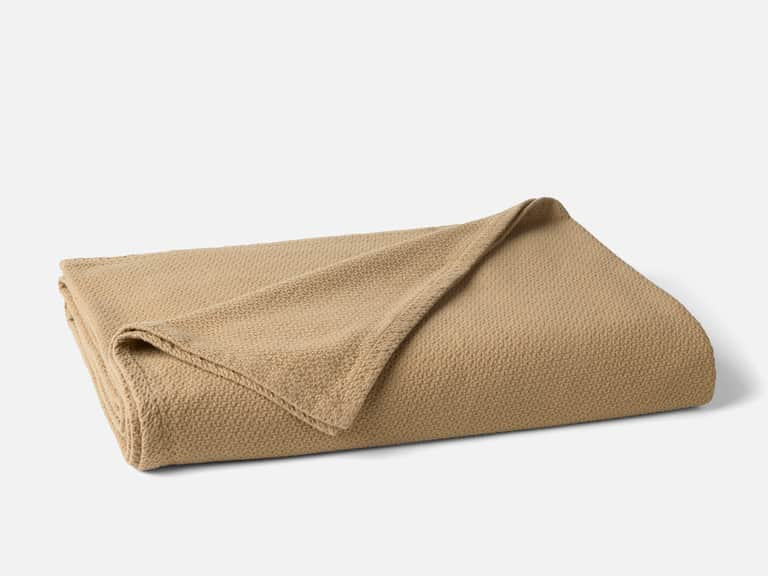
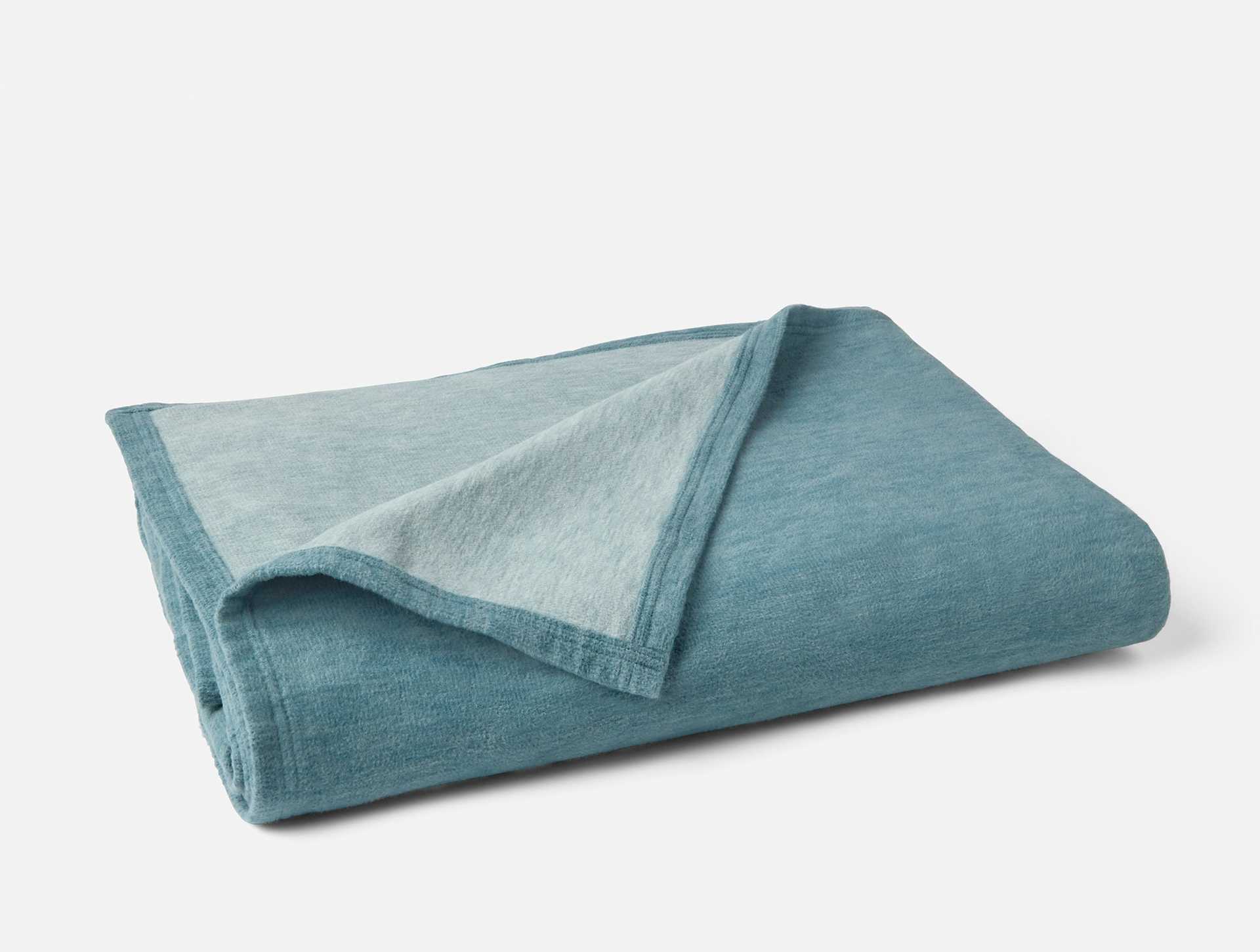
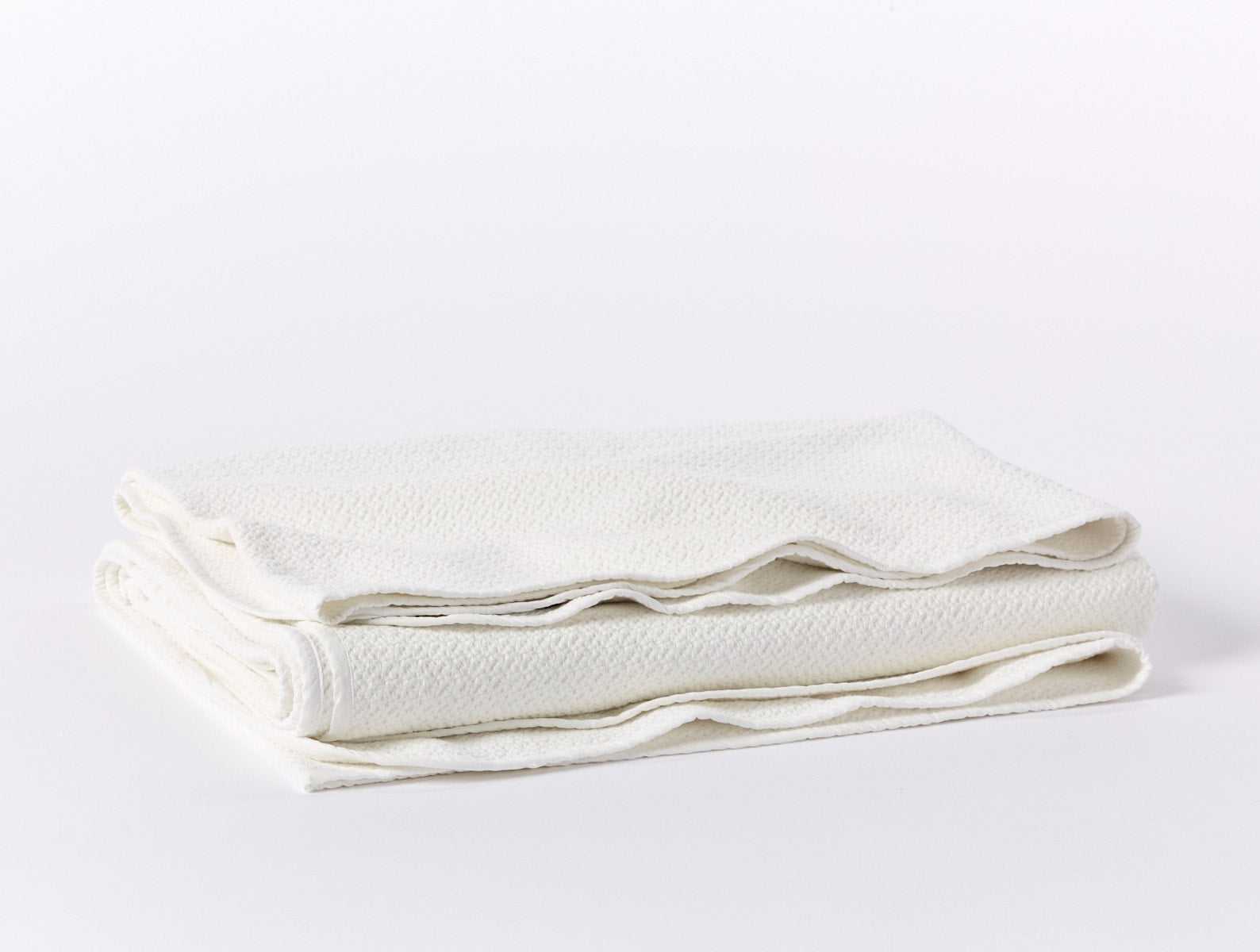
Coyuchi’s Full Circle Recycled Cotton Blanket makes that conversation tangible. Its stated composition is 52% recycled cotton from Coyuchi’s 2nd Home program and 48% organically grown cotton. The blanket is woven in Germany, has a brushed finish, and carries Global Recycled Standard (GRS) certification, according to the product information. Those details offer more to assess than a vague promise of being “eco-friendly.” They also make an important distinction visible: recycled content is a meaningful part of a product story, not a complete account of its environmental or social footprint.
The case for giving cotton another life
Cotton’s familiar softness can make it seem like a simple material, but its journey is anything but. It begins as an agricultural crop, then passes through ginning, spinning, fabric formation, dyeing or finishing, and manufacturing. Each stage involves resources, energy, labor, and transport. Using recovered cotton can reduce the demand for some newly grown fiber and help divert textile material from disposal. The precise benefits depend on the material being recovered and the processes used to turn it into a new product.
The Full Circle blanket’s disclosed 52% recycled-cotton share is therefore a concrete point of reference. More than half of the stated fiber content comes from recycled cotton, rather than from newly grown cotton. The remaining 48% is organic cotton: new fiber, but described as organically grown. The blend illustrates a common design approach in recycled textiles. Recovered fibers contribute circularity; newly grown fibers can help create a yarn and fabric with the qualities a finished blanket needs.
That is a practical compromise rather than a flaw. Recycled cotton does not automatically have the length, strength, or consistency required for every textile application. Blending it with virgin cotton can help achieve a usable material, while preserving a substantial share of reclaimed fiber in the final product. For consumers, the proportion matters: “made with recycled cotton” could refer to a small fraction or a majority. A clear percentage makes the claim easier to understand and compare.
There is also an emotional value in materials with a visible past. Recycled yarn can show subtle variation in color and texture, rather than the perfectly uniform appearance often associated with a new fiber. In the Full Circle blanket, the product description notes natural color variation from the recycled yarn. It is a reminder that reuse need not disguise every trace of its origins. Variation can be part of the textile’s character, and a considered alternative to treating uniformity as the only sign of quality.
What a recycled-content claim tells you
A percentage is useful because it answers a specific question: how much of the stated composition is recycled? The GRS certification named for the Full Circle blanket adds a further reference point. The Global Recycled Standard is a certification framework associated with verifying recycled material and certain supply-chain requirements. Its relevance depends on the scope of certification and the documentation available for a particular product. It should be read as evidence about defined criteria—not as a universal stamp that every aspect of a textile is sustainable.
For a reader evaluating any recycled-cotton blanket, several distinct questions are worth keeping separate:
- How much recycled material is present? Look for a specific percentage and a clear statement of the remaining fibers.
- What does “recycled” mean in this case? Pre-consumer scraps, post-consumer textiles, or a combination can have different origins.
- How is the claim verified? Ask whether a recognized certification or documented chain-of-custody system is named, and what it covers.
- Where was the textile made? Fiber origin, spinning, weaving, dyeing, and finishing may take place in different locations.
- How is the item intended to be cared for? A textile that is difficult to maintain or quickly loses function may have a shorter useful life.
The Full Circle product details identify Coyuchi’s 2nd Home program as the source of its recycled cotton, state the recycled and organic fiber percentages, name Germany as the weaving origin, and describe GRS certification. These disclosures make the product’s material composition more legible. They do not, by themselves, provide a full lifecycle assessment, a quantified comparison with a conventional blanket, or an account of every environmental impact across farming, processing, production, and transport.
That boundary is important. Words such as “circular,” “responsible,” and “low impact” are broad. A certification may verify specified criteria, but readers should not assume it measures every impact or guarantees a product is better in every respect. Clear, specific information is more useful than an all-purpose sustainability claim—and a little healthy curiosity is not cynicism. It is how labels become meaningful.
What recycled cotton cannot promise
Recycled content does not make a textile impact-free. The recovered fibers still need to be collected or otherwise sourced, sorted, prepared, and processed. The fabric must be woven, finished, and transported. Those operations require resources, and their impacts vary by facility, energy source, methods, and scale. Nor does a recycled label necessarily tell you whether the material was post-consumer or pre-consumer unless that distinction is stated.
It also does not automatically answer questions about working conditions, chemical management, water use, or the product’s end of life. Some of these subjects may be addressed by a certification or additional brand disclosure; others may remain unreported. A responsible reading of a label means noticing both what it says and what it leaves open.
Perhaps most importantly, recycled content cannot compensate for a product that is treated as disposable. If a blanket is rarely used, quickly damaged, or replaced before it has served its purpose, the material strategy has only gone so far. Circularity is not just about where fibers begin. It is also about keeping products useful for as long as possible, repairing them where feasible, and considering what happens when they are no longer wanted.
Durability is part of the design story
A long-lived blanket is an understated form of resource efficiency. Every additional season of use helps make better use of the materials and labor already invested in it. Durability is not measured by a single specification. It reflects fiber quality, yarn construction, weave, finishing, edge treatment, frequency of use, and how the blanket is washed and stored. Even the way an item is chosen matters: a textile that suits the household’s climate and habits is more likely to be used regularly rather than left folded in a cupboard.
The Full Circle description presents the blanket as a substantial home textile with a brushed finish and construction intended to withstand regular wash and wear. It also notes that recycled yarn can create color variation. Such design details matter because they shape how a blanket performs and how its appearance changes over time. A brushed surface may offer a softer hand; the underlying quality of construction, however, is what determines whether the piece retains its usefulness through repeated use. Product descriptions can introduce these considerations, but they are not a substitute for long-term wear data.
Good care is not glamorous, but it is part of the textile’s afterlife. The stated care guidance for the Full Circle blanket is a cold, gentle machine wash with like colors, followed by tumble drying on low. Following a manufacturer’s instructions helps avoid needless stress from unsuitable temperatures, harsh cycles, or excess drying. Washing only when needed, rather than by habit, can also reduce wear and energy use. Air drying may be an option in some homes, but the product’s specific instructions should take priority.
Between uses, clean and fully dry blankets should be stored in a dry place with enough room to breathe. Avoiding overcrowded storage can help protect the fabric from creasing and friction. If a small snag or loose thread appears, addressing it early may prevent more extensive damage. A repair does not have to be invisible to be worthwhile: visible mending can become part of a blanket’s history, extending its service rather than ending it.
A useful way to read the blend
When a product combines recycled and newly grown fibers, the blend is a design decision as well as a materials declaration. In this case, 52% recycled cotton gives the blanket a majority-recycled composition, while 48% organic cotton supplies new cotton fiber. The organic designation speaks to the agricultural standard claimed for that portion of the material; it does not mean the fiber is recycled. These are different attributes, and neither should be mistaken for the other.
For people choosing between blankets, the right comparison is not simply “recycled or not.” Consider the textile’s complete stated composition, intended weight and use, construction, care burden, origin disclosures, and the evidence behind its claims. A lightweight blanket used comfortably year-round may be more useful to one household than a heavier piece that is brought out only occasionally. A washable blanket may fit one care routine better than a delicate textile requiring specialist cleaning. The most thoughtful choice is the one that combines credible material information with real, lasting use.
It can also be helpful to compare products within a category rather than across unrelated goods. An organic-cotton blanket and a recycled-cotton blend may differ in feel, construction, and care, making a single headline metric insufficient. A product with more recycled content is not automatically the best choice for every home. Equally, the absence of recycled fiber does not reveal the full impact of the alternative. Look for transparent, comparable facts; resist turning one attractive number into a verdict on an entire supply chain.
Beyond the label: a more circular home
There is an elegant restraint to buying fewer textiles and asking more of the ones already owned. A blanket that suits the bedroom and the sofa, works across seasons, and can be cared for without elaborate effort is more likely to earn a lasting place in daily life. Reuse, repair, sharing, resale, and appropriate textile collection can all play a role in keeping fabric in circulation, although local take-back and recycling options vary. Not every worn textile can be turned into another blanket, so it is best to check the requirements of a collection program rather than assume every item is recyclable.
For brands, circular design means more than introducing a recycled-content product. It can involve choosing materials that are easier to identify and recover, communicating fiber composition clearly, designing for longevity, and offering practical routes for repair, resale, or take-back where possible. For shoppers, it means asking questions that make those commitments easier to evaluate. What is recycled? How much? How can the item be cared for? What support exists when it is no longer wanted?
The Full Circle blanket is most useful as a case study, not a final answer. Its 52% recycled cotton and 48% organic cotton composition demonstrates how recovered fiber and newly grown fiber can coexist in a home textile. Its stated GRS certification and named 2nd Home source provide additional points of context. Its product information also leaves room for sensible follow-up questions about fiber origin, processing impacts, durability over many years, and eventual end-of-life options.
That is the honest promise of recycled cotton: not a perfect loop, and not an effortless solution, but a way to make existing material matter again. A blanket’s true circularity is measured not only at the moment its recycled content is declared, but across the quiet years it spends being used, washed, mended, handed on, and kept in service. The most responsible textile is rarely the one with the most persuasive adjective. It is the one whose claims can be understood—and whose useful life is allowed to unfold.
A considered checklist for choosing recycled-cotton bedding
Before choosing a recycled-cotton blanket, take a moment with the details rather than the mood of the marketing. A concise checklist can turn a general intention to shop responsibly into a more grounded decision:
- Check the exact recycled-content percentage and identify the other fibers in the blend.
- Look for information about the source of recovered material and whether it is post-consumer, pre-consumer, or both.
- Read certification descriptions carefully; understand what the named standard verifies and what it does not claim to cover.
- Review manufacturing and origin information, keeping fiber origin separate from weaving or finishing location.
- Choose a weight, size, and texture that suit the way the blanket will actually be used.
- Read care instructions before buying, and consider whether they fit your household’s routines.
- Prioritize repairability, regular use, and long service over short-lived trend appeal.
These are modest questions, but they change the way a textile is seen. A blanket is no longer just a soft finish to a bed or sofa; it is also a record of material choices, manufacturing decisions, and care. Recycled cotton offers one promising chapter in that record. Its greatest value emerges when it is paired with transparency, thoughtful construction, and the intention to keep the finished piece in use.