Textile care & considered living
How Throw Construction Shapes Longevity and Repairability
A throw’s appeal may begin with its color, softness, or inviting drape. Its longer story is often written in less conspicuous details: how the yarns interlace, how the edges are secured, and whether a small fault can be mended before it becomes a reason to let the whole textile go.
Published November 15, 2026
There is a particular pleasure in reaching for the same throw, season after season. It rests across the end of a bed, accompanies a quiet evening on the sofa, and gathers the minor evidence of use: a softened surface, a little pilling, perhaps a pulled loop at the edge. These marks do not necessarily mean a textile is finished. The question is whether its construction can take everyday wear—and whether its vulnerable points can be repaired with care.
When choosing a throw with longevity in mind, softness and color are only the opening scene. Weave, yarn structure, fiber composition, seams, hems, and care requirements all help determine how a textile behaves over time. None offers a guarantee of indefinite life. But these details can help you understand what you are buying, what kind of wear to expect, and whether a small repair is likely to be practical.
Repairability is not simply a matter of whether a needle can pass through fabric. It depends on the scale and location of the damage, the construction of the textile, access to matching thread or yarn, and the owner’s willingness to accept a visible mend. A thoughtful choice starts with noticing how a throw is made—not just how it looks when perfectly arranged.
Read the weave before you read the label
In a woven textile, lengthwise and crosswise yarns intersect to form a structure. The spacing, tension, and pattern of those yarns influence the fabric’s hand, drape, and response to friction. A compact weave may limit how readily a snag travels, while a more open structure can feel airy and pliable but make individual loops easier to catch. These are tendencies, not rules: yarn quality, finishing, and use matter just as much.
Look closely at the surface in good light. Are the yarns evenly arranged? Does the fabric show gaps that appear intentional, or do they look like loose sections? A small variation in texture may be part of the design; a row of visibly slack yarns may warrant a closer inspection. Gently handle the fabric rather than pulling at it. A delicate tug can turn an observation into damage.
Pattern can offer clues, too. A plain weave tends to have a regular, orderly surface. Twills form diagonal lines, while waffle structures create raised cells and recessed channels. Matelassé construction builds a dimensional, quilt-like pattern into the fabric without necessarily adding a separate layer of batting. Each structure creates a different visual and tactile effect, but no weave is automatically the most durable. The useful question is whether the construction suits the throw’s intended role and how you plan to care for it.
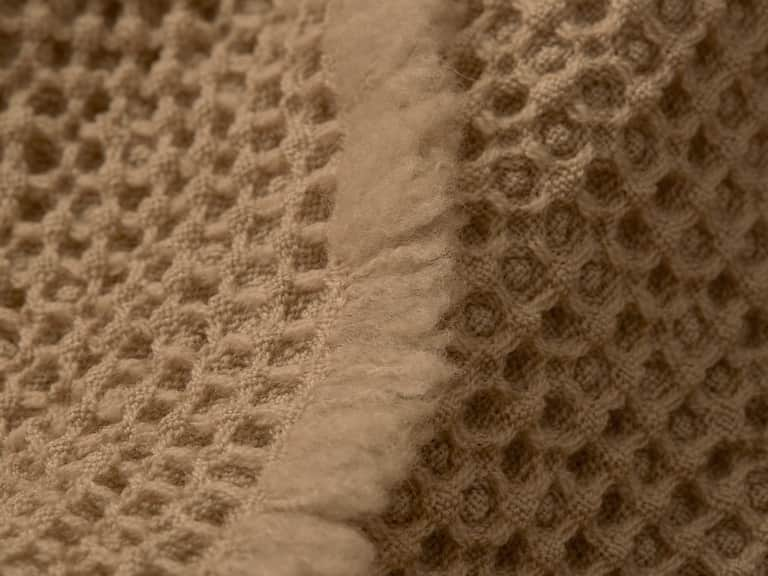
For instance, the Nid Blanket uses pure wool in a waffle weave, with a compact yet elastic texture. Its three-dimensional surface is a feature of the construction, not simply a printed effect. That structure can be appreciated for its warmth and tactile depth, while its raised areas are also worth examining when considering where friction or snagging might occur. The product information describes the blanket as a warm, light layer for mid-season use and specifies a weight of 300 grams per square metre.
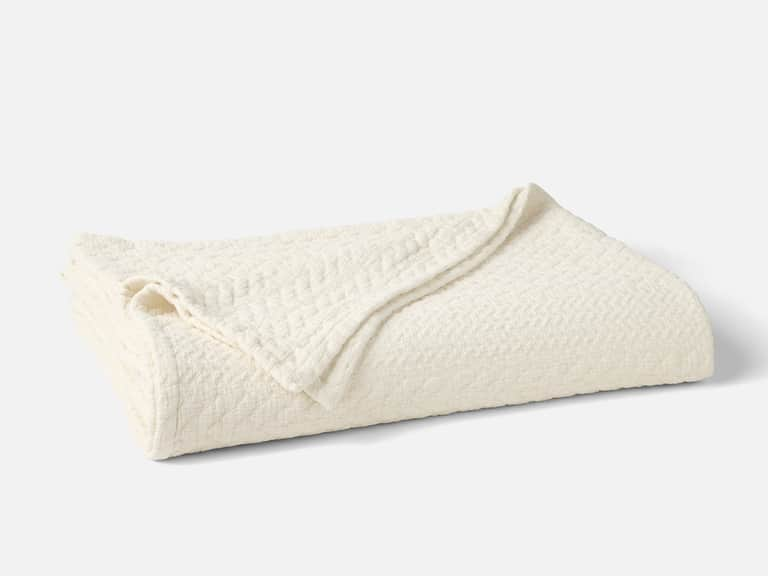
A different example is the Angeles Organic Matelassé Blanket, made from organic cotton with a braided wave pattern, a gauze-like underside, and a mitered hem. Its patterned construction and finished edge offer useful details to notice when comparing blankets: the surface has dimension, while the perimeter is shaped and secured rather than left as a raw cut. A finished hem does not make any textile immune to wear, but it can help the edge remain orderly in ordinary use.
Yarn structure: the small architecture of a throw
Fibers become yarn before they become fabric, and yarn construction helps shape how a textile feels and wears. A yarn can be made from a single strand or from multiple strands twisted together. Twist, thickness, and consistency all influence how the yarn behaves in a weave or knit. A surface with prominent loops, fuzzy fibers, or delicate texture may be especially susceptible to catching on rings, furniture corners, pet claws, or rough zippers.
That does not make textured yarns a poor choice. Texture is part of their character. It simply suggests a little more attention to placement and handling. If a throw will be used daily in a high-traffic room, consider whether its surface is likely to meet frequent friction. A smoother, more compact textile may be easier to live with in that setting; a more open or lofty weave may be better suited to gentler use or occasional layering.
Fiber blend matters because different fibers respond differently to washing, abrasion, heat, and moisture. Cotton is often valued for its familiar hand and practical washability, although care instructions vary by construction and finish. Wool is naturally insulating and can be made into a range of fabrics, from light and elastic to dense and substantial. Blends bring together different qualities, but they can also make repair more complicated if the fibers behave differently or an exact replacement yarn is unavailable.
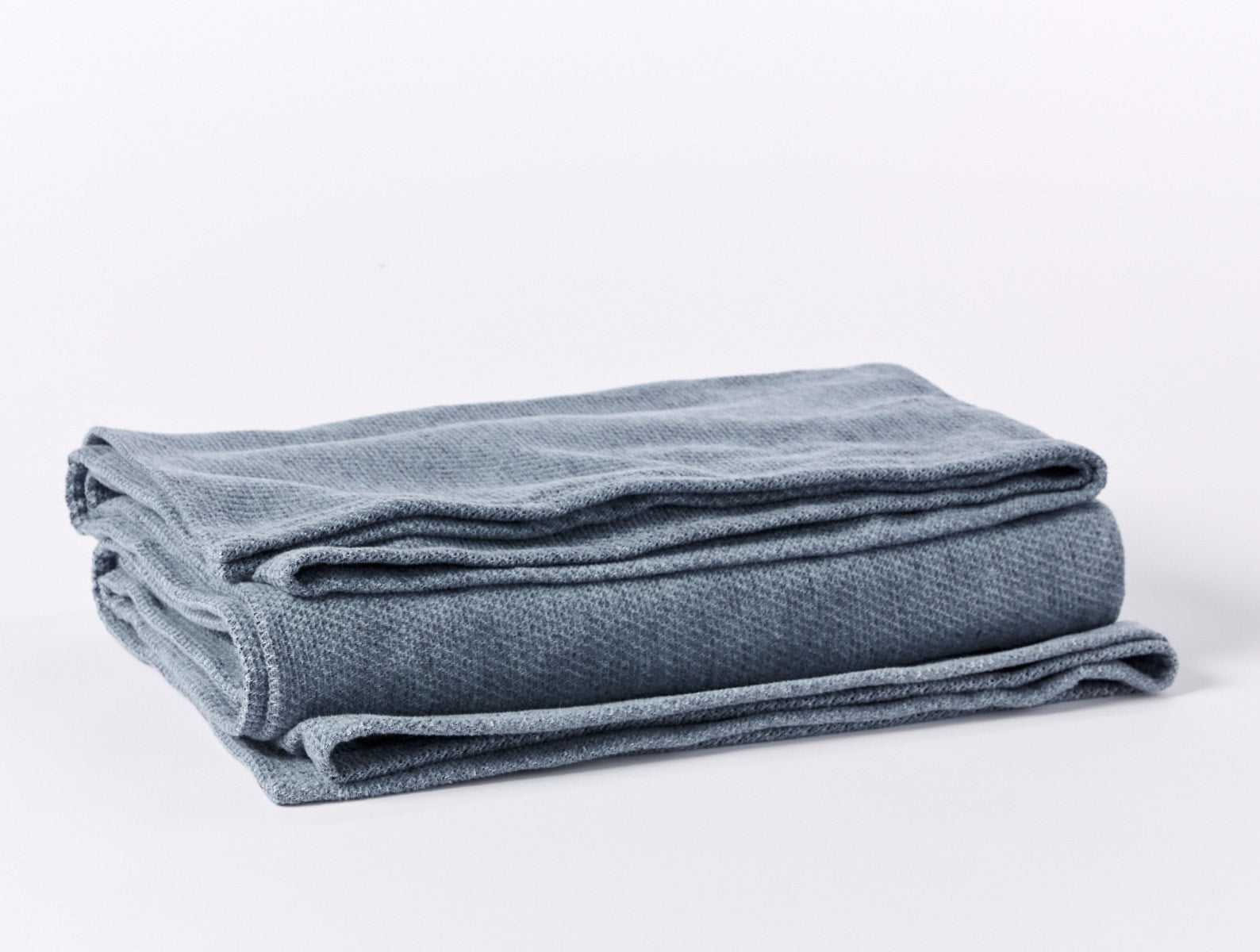
Consider the Sequoia Washable Organic Cotton and Wool Blanket, which combines 70% organic cotton with 30% organic wool. The fibers are twisted together before weaving; the fabric is brushed and finished with a double-needle stitched edge. Its product information lists machine washing on a cold, gentle cycle and tumble drying on low, with instructions to remove it promptly. Those specifics make the construction and care approach easier to assess before purchase.
Blends can offer a pleasing balance, but there is no universally ideal composition. A shopper who values straightforward home laundering may favour a different textile from someone prepared to use professional care. Before deciding, read the full care guidance and consider whether it fits your real routine. A throw that needs a method you will not use is less likely to receive the maintenance that helps it stay in good condition.
Edges are where a throw often tells its story
The perimeter deserves a close look. Edges are handled, folded, tugged, and exposed to friction as a throw is draped or moved. They are also where construction becomes most visible. A hem folds fabric back and secures it; binding covers or reinforces an edge; a blanket stitch loops along the perimeter; fringe may be an intentional finish or, in some textiles, the result of unraveling. These are different treatments with different appearances and care needs.
Examine whether the edge finish appears even and firmly attached. Look for skipped stitches, loose sections, or an area where the finish seems to pull away from the fabric. If the textile has fringe, check that it looks consistent with the design and that the yarns at the fringe base are not coming undone. An edge that is easy to inspect is easier to monitor; early attention can make it possible to address a small loose section before surrounding yarns begin to shift.
Construction details can also influence the kind of repair that may be possible. A straightforward hem may be resewn if a short section opens, while a bound edge may require an appropriate replacement tape or careful reattachment. A blanket stitch can sometimes be restored with similar thread, although matching the original color and tension takes patience. These are possibilities, not promises: the fabric, location, extent of the damage, and available materials all affect the result.
Look at the edge before buying, but also revisit it during regular care. Shake the throw gently and inspect it for loose threads or newly pulled loops. A short thread should not be yanked: pulling can tighten the surrounding weave or enlarge the gap. If the thread is intact and simply displaced, it may be possible to ease it back into place with a blunt needle or a small crochet hook. If it has broken or the weave has opened, a textile repair professional may be better equipped to assess the damage.
What makes a textile repairable?
Repairability begins with access. A small hole in a woven textile may be easier to mend when the surrounding structure is clear and stable. A short split in a seam or hem may be straightforward to secure if the fabric has not frayed extensively. By contrast, a large tear, a worn-through patch, or damage across a highly textured area may call for specialist knowledge. Some repairs can be discreet; others become visible features of the textile.
It also helps to have useful information about the throw. Keep the care label, product description, and any notes about fiber content and construction. If a repair is needed later, knowing whether the textile is wool, cotton, or a blend can guide decisions about washing, thread choice, and how it should be handled. If you have a leftover piece of yarn or fabric from the original item, store it in a labelled envelope in a dry place rather than relying on a future color match.
For minor issues, gentle action is usually preferable to improvisation. Avoid trimming a loose yarn close to the surface unless you know it is a stray end rather than a structural thread. Do not apply adhesive, iron-on patches, or strong stain treatments without checking whether they suit the fiber and finish. Heat and moisture can alter some textiles, while harsh cleaning can affect color or surface texture. When in doubt, pause and seek advice from a textile repair specialist or a cleaner experienced with the material.
Visible mending can be a thoughtful option when a discreet repair is unrealistic. A contrasting stitch, small woven patch, or carefully reinforced area may add character while extending use. The goal is not to pretend that a well-used throw is untouched; it is to preserve its function and keep damage from spreading. A repair should be appropriate to the textile and should not place new strain on fragile surrounding yarns.
Care is part of construction
Even a well-made throw can deteriorate if washed or stored in ways that conflict with its care instructions. Read the label before laundering, including the recommended water temperature, cycle, drying method, and any restrictions. A gentle cycle is not interchangeable with every other care requirement, and air drying is not automatically right for every fabric. Follow the specific guidance rather than assuming that all cottons, wools, or blends behave alike.
Before washing, consider the size and weight of the throw and whether your machine can accommodate it without crowding. Overfilling a washer can prevent items from moving freely and may place extra stress on seams and edges. Use a suitable amount of detergent and avoid combining the throw with items that have hooks, zippers, or rough fastenings likely to catch the surface. If the care label recommends professional cleaning, factor that ongoing care into your choice.
Between washes, airing a throw and addressing small spills promptly may help reduce the need for frequent laundering. Keep it away from rough surfaces that can snag a loose weave, and rotate how it is folded or draped to avoid repeatedly stressing the same area. When storing it for a season, make sure it is clean and fully dry, and choose a dry place protected from pests and prolonged direct sunlight. For wool, follow product-specific storage guidance rather than relying on a one-size-fits-all rule.
A practical inspection before you choose
Shopping for durability does not require technical expertise. A few quiet observations can reveal whether a throw seems suited to your household and whether you can care for it appropriately. Read the product details, handle the fabric if possible, and take a moment to look at the edges and the reverse. Ask not only, “Will this feel beautiful today?” but also, “What will it need from me after a year of use?”
- Check the weave. Look for consistent construction and decide whether the openness or texture suits the way you will use the throw.
- Notice the yarn. Consider whether loops, raised texture, or a fluffy surface might catch in your home environment.
- Inspect the perimeter. Look for an even hem, binding, blanket stitch, or intentional fringe, and check that it is securely finished.
- Read the fiber and care information. Confirm the material composition and make sure the recommended maintenance is realistic for you.
- Consider repair access. Ask whether a small edge repair would be visible, whether the construction is understandable, and whether matching materials might be available.
- Think about the setting. A delicate, lofty throw may be better for occasional use than for a sofa shared with pets, children, or rough upholstery.
Longevity is made of everyday decisions
A throw’s lifespan cannot be read from a single detail. A dense weave may still wear under heavy friction; a delicate texture may remain beautiful when handled gently. A stitched edge is useful, but it does not eliminate the need to inspect it. Fiber labels and certifications can describe materials or production attributes, but they do not by themselves promise that a textile will last for a particular number of years.
What construction can offer is a more informed starting point. A clear weave, a well-finished edge, a fiber blend suited to your routines, and care instructions you are prepared to follow all make it easier to choose thoughtfully. Repairability adds another dimension: when a small defect appears, the textile’s structure and your willingness to mend it may determine whether the throw remains in use.
In a home, longevity is rarely dramatic. It looks like a loose stitch noticed early, a throw washed according to its label, a snag eased rather than pulled, or a worn edge reinforced before it gives way. These acts are modest, but together they change the relationship between a household textile and the person who owns it. A throw chosen with care—and cared for with attention—can keep its place in the room long after the first impression has passed.